Poe’s Advice for Writers

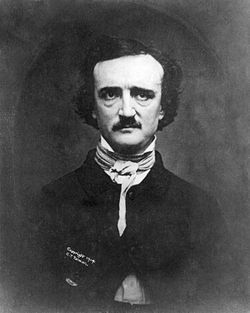
Along with Nathaniel Hawthorne, Edgar Allan Poe did more than any other American to shape the modern short story. If you read other stories or novels from that era (even ones by famous and highly regarded authors), you very quickly start to notice a pervasive lack of narrative focus. That’s because for the most part people were still fumbling around with form, trying to figure out the shape of short fiction. As a consequence, stories and novels from the earlier part of the 19th century tend to wander this way and that, including lots of more or less interesting passages that ultimately seem to contribute very little to whatever might be the main point of the piece. In fact, sometimes you can’t even tell what that main point is supposed to be.
250px-Edgar_Allan_Poe_2

Against this meandering compositional approach, Poe argued that fiction should always strive for “unity of effect.” He said that an author’s job was to hone their writing craft to the point where they could consistently and completely dictate the reader’s experience of the work. In order to do this, you need to pick a point and stick to it. Poe didn’t necessarily weigh in on whether authors needed to outline. In fact, outlining doesn’t seem to have been a very common practice in the era. But Poe did say that an author should imaginatively figure out the entire plot (all the way to the end of the narrative) before trying to write anything down. This clearly puts Poe into the “plotter” camp.

In a famous exchange of letters in which the two authors discussed craft, Poe and Charles Dickens agreed about the advantages offered by this strategy of figuring out the end of a story before writing the beginning. They specifically cited William Godwin’s influential novel Caleb Williams (1794) — something of an early legal thriller — as a work that benefitted from being carefully plotted. Godwin supposedly knew how he wanted his book to end and he worked backward from the denouement, inventing scenes and situations that would logically lead him (and his readers) to arrive at the desired conclusion. Poe also liked this approach because he thought it helped the author create a sense of narrative inevitability. The reader feels like everything that happened in the story makes sense and also that it couldn’t have happened any other way. The beauty of this is how it ensures you never break your reader’s suspension of disbelief. Even if your stories have supernatural happenings (as a number of Poe’s do), the world of your fiction needs to feel completely and seamlessly realistic. The mark of narrative truth, as Poe well knew, is perfect internal consistency.

For Poe, a well-written story should not only perfectly embody the author’s intention, but during “the hour of perusal” the author could control “the very soul of the reader.” Poe’s emphasis on “the hour of perusal” indicates his strong preference for short stories, which he called tales. While he read and reviewed a lot of novels during his life (and even penned one himself), Poe thought novels suffered from the fact that readers can’t typically read them in one sitting. The problem here is that all the normal distractions of everyday life prevent a reader from getting lost in the novel and staying completely under the narrative spell until it’s finished. For Poe, when the spell is broken, so is the work’s “unity of effect.” Thus, with a novel the reader can’t reliably take in the fullness of the author’s intention.

This doesn’t mean you can’t write novels.

Like I said, Poe recognized the commercial advantages of the form and tried his hand at one. But it does mean, in order to follow Poe’s writing advice, you need to make sure every element of a story or novel needs to drive toward that “unity of effect.” If something doesn’t advance the plot or serve to reveal character, then you need to edit it out. Yes, Poe’s own writing can seem ornate at times. He consciously cultivated a lush, Gothic style that would evoke the dark and mysterious settings that heightened the reader’s sense of horror. But these prose stylings work because they help Poe create his desired effect. When you look past the long, rambling sentences, and the self-consciously erudite vocabulary, you can still see how Poe stays focused on telling every story in the shortest and sharpest way possible. He believed in keeping things narratively lean.

If you want to follow Poe’s lead, then every sentence, every word, needs to be there for a reason.

Furthermore, when you get to the punchline, you’re done. Poe never lingers after his work has arrived at its narrative denouement. Get in, say what you need to say, and get out.

To be clear, Poe was adamantly opposed to setting any arbitrary or external limits on fiction. This got him into some trouble with his peers, who found many of Poe’s chosen subjects distasteful and much of his writing vulgar. But Poe fearlessly championed the idea of Art for Art’s Sake. An artist needs the absolute freedom to express whatever comes out of them, with no fear and no limits. This radical stance is clearly part of why Poe has remained such an influential artist around the world. We’re lucky these days that it’s perfectly acceptable to write about madness, torture, incest, violent death, or whatever you need to say. You can conjure up and express just about any nightmare scenario you imagine. But this is also a reminder that as artists we need to continue taking risks, continue challenging our readers. In this sense, I think dangerous and transgressive writers like Chuck Palahniuk and Cormac McCarthy and James Ellroy perfectly channel Poe’s defiant spirit.

Whatever you’re writing, make sure to be as brutally honest as you can.

images-137

Why Is TV So Bad for Writers?

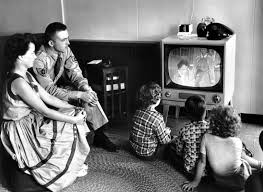
Like many other writers in the public eye, Stephen King has said in a bunch of interviews that he thinks watching television is one of the worst things a writer can spend his or her time doing. As far as I’ve seen he hasn’t spent a lot of time elaborating on why he feels this to be the case, but he makes the claim often. Maybe King doesn’t say more because it’s self-evident. He certainly seems to think so. Also, I admire the courage of a writer from the baby boomer generation for so vocally rejecting one of the defining appliances of his youth. For me, though, the best thing about King’s pronouncement is that I’ve started re-examining my own TV habits.

images-135

I don’t think of myself as having a television problem, but I probably could, and probably should, cut back. I often watch for a couple hours in the evening. Yes, it’s mostly a waste of time. Not entirely because I sometimes write about television. Though I mostly enjoy watching sit-coms and I don’t know that I’ve ever written about those. The shows I tend to write about are ones that I watch more for analysis than for simple entertainment. Not that I don’t enjoy watching things like True Detective or The Killing. I do, and I recognize that Netflix and other streaming services are ushering in a new golden age of television where shows can become more novelistic as their stories arc over full seasons and beyond. But I’ve also watched a fair number of things that I didn’t enjoy for writing projects. The Following comes to mind. The Poe connection notwithstanding, I know wouldn’t have made it more than a few episodes into that one if I hadn’t accepted an assignment to write about it.

But the question still remains, why exactly is television so terrible for writers?

At the risk of rehashing a million arguments made in the 60’s and 70’s, I think I’ve got a few cogent arguments that will have aspiring writers turning off the tube. If you need more convincing, you can track down Jerry Mander’s 1978 classic Four Arguments for the Elimination of Television. For my part, I’m not worried about how TV affects society as a whole or the mass of watchers as individuals. I’m just thinking about how it impacts those of us who write.

First, TV sucks down time we could better spend on other activities. Every hour you spend staring into colorful, dancing pixels is at least an hour you don’t spend writing. Of course you can’t write every hour of the day. Nobody does that and nobody expects you to. But if you haven’t gotten your writing in for the day for whatever reason, then what the hell are you doing sitting in front of the TV before bed? The other thing about time, which is always at a premium, is that when you’re not actively writing you need to be reading. One of the neglected secrets to success as a writer is spending as much time as possible reading the work of other writers. You’re learning more about your craft even when you’re just relaxing with a book. You’re hearing new ways to describe things. You’re observing different ways to tell a story. And most importantly, you’re exercising the verbal aptitude of your brain.

In fact, this idea of verbal aptitude brings us to the second major problem with television for writers. As its name implies, TV is a visual medium. It’s audial too, but the primary way it works is by riveting the attention of our eyes. It shows us moving pictures. US television broadcasts at a rate of 24 frames per second. If, like they say, a picture is worth a thousand words, then that’s 24,000 words per second. That’s a full-length novel’s worth of description every three to four seconds. Processing all that information should be exhausting, but it’s not. Instead it teaches our brains to become lazy, at least in terms of our verbalization of things. The part of us that works to put into words everything we see and experience just can’t keep up with 24,000 words a second. No way, no how. So instead we shut down that part of ourselves. We stop exercising our verbal aptitude so that we can just let the pretty pictures wash over us. That means, TV shuts down the inner writer dwelling in each of us. That thought alone should terrifying enough to make you keep your television in a locked cabinet.

Third, TV is an anti-literacy machine. Okay, that sounds hyperbolic, but you don’t have to believe me. Test it out on yourself. Give up television for just one week and devote those hours to reading instead. You don’t have to read anything in particular, but maybe pick two or three novels of those novels you’ve been meaning to read but haven’t gotten around to. The typical American watches about five hours of TV a day. That’s 35 hours of reading during your one week experiment. So, if you honestly convert your television hours straight over to reading hours, you’ll probably read a few books over the course of the next week. You’ll certainly get through one or two even if you’re a slow reader. But this experiment isn’t even about the missing time you’ll rediscover. It’s about the shift in your thinking. Your brain will feel different after a week of reading a few books instead of watching TV. Your verbal aptitude will be heightened. When you walk around in the world, you’ll find yourself internally describing things in words. You’ll find yourself making different observations, connecting ideas in different ways, being more literate. You’ll also be inspired to buy a couple more books to replenish the ones you finished reading last week, and that promotes literate culture even beyond the limits of your own skull. As will the increased writing you do.

And that’s why television is so deadly for writers. It wastes your time. It reduces your verbal aptitude. And it alienates you from your own literacy. Thanks to public schools, most Americans can read. So we’re not actually illiterate, but when we don’t read or have no interest in reading, we become aliterate. When that happens, book culture stagnates and dies. Some people might think the endangered state of book culture doesn’t affect them. It does. Deeply. But that’s an argument for another time.

If you’re a writer or want to be one, then you already know what sort of world you want. One with books, and more of them.

So, I think I’ll give it a try. Starting now, I’m committing to one full week of reading instead of watching TV.

If you decide to join me and do this too, stop back by and let me know how it goes.

Slogging Through Two Seasons of The Killing

I know I’m late to the party, but I finally found out who killed Rosie Larsen and why. This past weekend I finished watching the second season of The Killing, a moody police procedural set in Seattle but produced by a Danish director and crew. Though I really disliked the eye-rollingly tidy final episode, which was at least a twist or two too far (and maybe ten or more too far), the finish wasn’t really where the show fell apart. This denouement was just the final straw that broke the back of a strong beast overburdened with practically every piece of personal baggage the writers could pile onto it. The last episode also fell directly into the old trap of using long flashbacks to show us the crime as it happened. While not the most egregious misuse of this device I’ve seen, a dubious honor that still goes to the Jody Foster rape drama The Accused (1988), the effect was still to whitewash all those careful shades of gray the show had worked so hard to establish. The idea that the past is somehow perfectly recoverable and knowable not only comes across as blithely expository and patently false, but it completely undermines the contradicting subjectivities and moral ambiguity that are really what make dark crime fiction so compelling in the first place.

images-133

The characters and case in these first two seasons were quite interesting, but ended up having more potential than punch. Although some have complained that the story dragged on for too long, I found the opposite to be true. I think the idea of spending two full seasons on a case that most cop dramas would have solved in a single 50 minute episode is refreshing. In fact, personally I would have liked to wallow even deeper in the drudgery of police work. But while The Killing trusted its viewers enough to stay engaged with the slow character development this required, it punked out when it came to sticking with the long, tedious work of solving a crime and coming to terms with its consequences. Sadly this element that should have made the program so unique proved its ultimate undoing.

The painful thing here is that the show started out so strong. I loved the first season (or most of it), but by the second season I started to get frustrated with having so many twists and turns. They seemed to want a big new surprise at the end of every episode, so instead of feeling gritty and real, the show starts to feel forced and over-wrought. The problem arises that every stunning new reversal can’t help but tear another long snag of unintended implausibilities into the fabric of the show’s diegetic reality. At a certain point this tangled knot of deception becomes so Gordian that even slicing through it with a bright sword ends up feeling like a betrayal. I understand that some viewers might have struggled with boredom while confronting the long, painful process of not knowing what happened and not knowing how to find out; however, that real-world grind of police work and emotional marathon of seeing a case to conclusion seemed to be precisely what the show had earlier promised.

So, why not just make us squirm under this pressure? Why not stay committed to the aesthetic vision of the first half dozen episodes?

Instead, cliffhanger episodes and a new prime suspect every week maintained freshness for a while, but in the end it became its own sort of overstimulated tedium. And the show became a failed reiteration of the cop show conventions it had attempted to break with in its earlier episodes.

Yes, at times the show still made an honest attempt to wallow in the procedural grind. The slow exhaustion that overtakes Detective Sarah Linden (Mireille Enos) helps express this discomfort. So do the combined pressures of Linden’s past as an unhappy foster child and her present as a criminally negligent parent. Enos performs the role brilliantly, with her face growing more haunted and her nervous tics becoming more pronounced as the case wears her down. The pathos of Detective Holder (Joel Kinnaman) also offers great insights into the grueling aspects of police work. When the show mines his troubled past as a narcotics addict and the ongoing strain that history has on his family relationships, the pathos becomes palpable. We really start to understand why these two damaged homicide detectives cling to their waterlogged and sinking case like two fatigued swimmers who know they can’t quite make it to shore. But then Linden’s exhaustion becomes an excuse for the cabal of corruption to take her badge and have her involuntarily committed, a plot turn that transmutes character gold into dull dramatic lead. Suddenly the problem is not so much that she’s pushing herself too hard, eating and sleeping too little, or suffering from over-identification with the victim and victim’s family, it’s all just a big conspiracy to keep her from solving the crime. She’s fine once they can bust her out of the psych ward.

Similarly, Holder moves fluidly from desperately needing his Narcotics Anonymous meetings, to learning that his sponsor has betrayed him and feeling desperate enough that he steals drugs from a former underworld contact and hooks up with another addict from his meetings, to being miraculously cured of his addictions and perfectly redeemed from the taint of corruption that earned him his dirty badge in the first place.

Getting out of the weeds to take a longer view of these first two seasons, I now almost want to laugh at the clown car of false leads, innocent suspects, red herrings, and wild tangents. It all feels very dramatic when you’re moving from episode to episode, but in retrospect the story arc comes off as a scattershot of mystery cliches — teenagers with secrets, corrupt politics, tribal casinos and Indian land rights, infidelities and jilted lovers, past connections to the mob that can’t ever be overcome, vigilante justice gone wrong, street snitches, teachers corrupting students, a haunted widower, a creepy dude living with his even creepier mother, millionaires partying with call girls, a mayoral campaign, cops running afoul of long-term FBI investigations, a terrorist plot, human trafficking, bodies in trunks of cars, and on and on. This is just too much to cram into a single case and have it still seem like gritty portrayal of day-to-day police work.

In the end, I still very much enjoyed these first two seasons of The Killing. Or I will have once I learn to forgive and forget that miserable finale. But for the most part, I don’t regret the time I spent getting lost in rainy woods, dirty back alleys, and shadowy offices. The tale remains legitimately heart wrenching as it explores Rosie Larsen’s awful murder and the tragic effects that her death has on those who knew and loved her. With their deep personal scars and uneasy chemistry, Detectives Linden and Holder are the sort of likably pessimistic cops that you find yourself wanting to follow through hell and high water. I do want to spend more time with them. I’m sure they will remain as compelling as whatever case they’re working.

But, that said, I still need to take a break before I dive into season three.

images-134

The Two Keys to Writing Successful Commercial Fiction

Lately I’ve been reading a lot of author interviews with best-sellers like James Patterson and Stephen King. And the two things that keep coming up from these writers is that if you want to succeed as a writer, one who can actually quit his day job eventually, then you need to have an incredible work ethic and you need to write things that people will actually want to read.

On the face of it, doing just those two things can sound so easy, but it’s sort of like saying that if you want to stay strong and healthy you have to eat right and get regular exercise. Everybody knows that already, but it’s still a constant battle to learn the lesson and make it stick. So many people have a hard time taking care of their health because we’re constantly surrounded by all these distractions and temptations. It’s way too easy to grab lunch at a fast food joint, or add pop and a bag of chips to your lunch. And why not have a cookie for dessert while you’re at it, right? Then instead of wanting to hit the gym and work off those calories, you feel like taking a nap or heading out for happy hour with friends. Before you know it you find that another day, another week, another month has gone and you’re even heavier and more tired and more out of shape than before.

It’s all about habits, energy, and focus.

So, the first thing is you have to write every day. Yes, seven days a week and 365 days a year. It’s what Patterson does. It’s what Stephen King has been doing for forty years. So, if you don’t believe it’s as simple as that or don’t think being prolific is the key, just look at the number of books those guys have written over the past few decades. It’s insane, but it’s also totally possible if you commit to it and get your work done. That probably means getting up early so you can get your work in before you have to show up at the office or the shop or wherever you work. And when you’re working you need to stay focused on your projects. You can’t let yourself get distracted by social media or checking your email or reading the news. You need to get your writing done. As you start to work on your daily habit, it’s also very beneficial to set a word count total for each day. If you can only swing a half-hour a day to begin with, then maybe you keep things modest at 500 words. If you can do an hour or more, then you should be writing at least 1000 words a day. In fact, writing a 1000 words a day is probably the optimal place to start. On the one hand, it’s a manageable block of writing both in terms of output and fleshing out a single scene. On the other hand, it’s going to feel like a bit of a stretch when you’re first getting started with your daily writing. It will build your writing muscles and improve your creative stamina.

Once you can do 1000 words a day without too much work, then you know you can set longer term goals. For example, you can think seriously about writing a novel. The average popular novel is 60,000-80,000 words. If you’re routinely writing 1000 words a day then you can feel confident that you’ll be able to crank out a first draft in just two or three months. If you have an outline. Otherwise, you’re going to have to reverse outline the first draft and see if the overall story arc works. Save yourself the extra work. And save your beta readers the grief of fumbling for the words to explain why your novel doesn’t quite hand together. Do an outline first. Not only that, but share the outline with a few trusted fellow writers or avid readers and see what they think of the storyline. Yes, this can feel like you’re spoiling the surprise, but there’s no way around this process. Besides, with all the novels and movies that have been written, do you really think that you’re going to come up with something that’s so revolutionary that your readers haven’t seen a variation on it before? Seriously? I mean, there’s a reason that somebody was able to write a massive scholarly tome about the seven plots that comprise the entire history of world literature. Humans are storytellers and we love telling variations on the same stories over and over again.

The second thing is writing accessible prose. If you want to publish commercial fiction, if you want to break out on the best seller list and actually make better than hobby money from your writing, then you absolutely have to write things that people want to read. It’s not about pandering or aiming at the lowest common denominator. Yes, these books are maybe not “high literature.” They’re beach books or airport books or grocery store books or whatever you want to call them. But what’s wrong with that? What’s wrong with providing people with books they actually enjoy reading? Doesn’t every author want to capture a reader’s attention, fire her imagination, hold her in suspense, make her miss her bus stop or stay up past her bedtime so she can read just one more chapter? To do this, you have to focus first and foremost on readability. You can’t get all fancy and erudite. You can’t be worried about impressing readers with your massive intelligence or your impressive education or your giant vocabulary. Save the big fancy words for when you want to beat your family at Scrabble. You have to tell a story that people want to hear and you have to do it in language that comes alive but that is also simple enough that the reader forgets about the author and the book. The reader has to fall into the world of the novel so that the pages turn themselves. Get rid of anything that gets in the way of that magical experience of the outside world melting away while the reader is lost in your book. Those are the books that people love. They’re the books that people tell their friends about. And they’re the books that make people eager to find more by that author. In one of his interviews, Patterson says books like this, truly engaging page-turners, are rarer than most authors realize.

As someone who starts reading way more books than he actually finishes, I think Patterson is absolutely right.